



Currency manipulation and china
China’s central bank said it will gradually make the yuan’s exchange rate more flexible, indicating that it was ready to break a 23-month-old dollar peg that has come under intense criticism from the United States and other countries.
The People’s Bank of China all but ruled out the one-off revaluation or major appreciation hoped for by critics, saying there was “no basis for big fluctuations or changes” in the exchange rate.
The move comes before a Group of 20 leaders summit in Toronto next week, where President Barack Obama and others were expected to increase pressure for a yuan move. By shackling the yuan to the dollar, U.S. lawmakers and manufacturers say Beijing has gained a trade advantage that costs U.S. jobs.
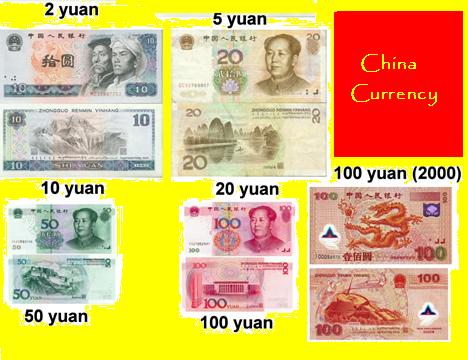
Is china yuan currency being manipulated ??
China’s deliberate policy of pegging the Yuan to the dollar makes American imports of Chinese goods artificially cheap and gives American companies opening factories in China an artificial subsidy. That’s good for China but bad for America, and helps explain our soaring trade imbalance with China. An extraordinary 83 percent of America’s non-oil trade deficit is with China. During the downturn, our trade deficit with other countries has been shrinking — but not with China.
China yuan and currency adjustments
The wheels of change are starting to turn. The Obama administration stood up to China when it imposed tariffs on Chinese tires and pipes dumped in the U.S. markets. The chattering class called it a trade war, but it’s not. It’s just applying the same rules of free trade that other countries respect, and that China agreed to when it entered the G-20 and was granted permanent normal trade relations with the US. Obama just blew the whistle.
China doesn’t let the yuan float. In the past, they just tied it to the dollar, like 1 dollar = 7 yuan. Right now, it floats a little, I think, by being tied to a “basket” of currencies (probably dollar, pound, euro, yen) and being allowed to fluctuate within a narrowly defined band, so like 1 dollar = 6.8 – 6.9 yuan.
Just because we import more from them than they do from us doesn’t necessarily mean that the yuan should be worth more than the dollar or that it’s currently undervalued. A lot also has to do with the rate of return one gets on yuan-devaluated investments, which, considering China ha
A lot also has to do with the rate of return one gets on yuan-devaluated investments, which, considering China has one of the fastest growing economies in the world, is pretty good..Or is it ?
China’s strategy is to generate full employment (thereby staving off social unrest in the interior) by maximizing exports. Like any exporter, it seeks to keep its currency weak relative to other currencies. So back in the 90s they pegged the yuan to the dollar, I forget at what rate, but at a rate which keeps it weak relative to the dollar.
At the same time, they’ve financed America’s cheap import binge by lending it the money to buy all this crap, which has generally served to weaken the dollar, which weakens the yuan further.
It’s like a crack dealer lending his crackheads the mnoey to buy his wares, to keep them addicted.
Obviously this is mutually unsustainable, but it seems to be a terminal codependency, and both must eventually go down together.
Periodically China talks about trying to disentangle itself from this mess, maybe letting the currency float (which I think is what the Americans want, I’m not sure offhand), retooling the economy for manufacturing for domestic consumption, not relying so much on exports, perhaps importing more from the US….
But how they could do this without destroying alot of jobs and having to run the dire gauntlet of social unrest, or triggering a run on the dollar as they try to maneuver out of their grimly exposed dollar position, is a mystery which so far baffles them, and in practice, no matter what they say they’ll try to do, they just continue with breakneck growth, floods of exports, and the weak currency.
“A heavily undervalued renminbi is the key financial distortion in the world economy today,” write Niall Ferguson, a history professor at Harvard, and Moritz Schularick, a professor of economic history at the Free University in Berlin. “China has carried out what amounts to a beggar-thy-neighbor devaluation, keeping the yuan-dollar exchange rate fixed even as the dollar has fallen sharply against other major currencies,” writes Krugman. Both columns urge President Barack Obama to address the issue with Chinese official during his visit to the country this week.
Both Krugman and the Ferguson-Schularick duo argue that China’s management of the renminbi-dollar exchange rate is artificially deflating the yuan’s value, making Chinese exports more attractive in places like the United States and making exports from all other countries less competitive—and keeping America’s trade deficit with China massive. Ever wondered why everything is “Made in China?” This currency manipulation, Krugman and Ferguson/Schularick say, is a big reason why.
So it would almost certainly be in America’s interests to get China to stop fiddling with the currency markets. Unfortunately, no one really knows how to do that.
China’s central bank said it will gradually make the yuan’s exchange rate more flexible, indicating that it was ready to break a 23-month-old dollar peg that has come under intense criticism from the United States and other countries.
The People’s Bank of China all but ruled out the one-off revaluation or major appreciation hoped for by critics, saying there was “no basis for big fluctuations or changes” in the exchange rate.
The move comes before a Group of 20 leaders summit in Toronto next week, where President Barack Obama and others were expected to increase pressure for a yuan move. By shackling the yuan to the dollar, U.S. lawmakers and manufacturers say Beijing has gained a trade advantage that costs U.S. jobs.
China’s deliberate policy of pegging the Yuan to the dollar makes American imports of Chinese goods artificially cheap and gives American companies opening factories in China an artificial subsidy. That’s good for China but bad for America, and helps explain our soaring trade imbalance with China. An extraordinary 83 percent of America’s non-oil trade deficit is with China. During the downturn, our trade deficit with other countries has been shrinking — but not with China.The wheels of change are starting to turn. The Obama administration stood up to China when it imposed tariffs on Chinese tires and pipes dumped in the U.S. markets. The chattering class called it a trade war, but it’s not. It’s just applying the same rules of free trade that other countries respect, and that China agreed to when it entered the G-20 and was granted permanent normal trade relations with the US. Obama just blew the whistle.
China doesn’t let the yuan float. In the past, they just tied it to the dollar, like 1 dollar = 7 yuan. Right now, it floats a little, I think, by being tied to a “basket” of currencies (probably dollar, pound, euro, yen) and being allowed to fluctuate within a narrowly defined band, so like 1 dollar = 6.8 – 6.9 yuan.
Just because we import more from them than they do from us doesn’t necessarily mean that the yuan should be worth more than the dollar or that it’s currently undervalued. A lot also has to do with the rate of return one gets on yuan-devaluated investments, which, considering China has one of the fastest growing economies in the world, is pretty good..Or is it ?
China’s strategy is to generate full employment (thereby staving off social unrest in the interior) by maximizing exports. Like any exporter, it seeks to keep its currency weak relative to other currencies. So back in the 90s they pegged the yuan to the dollar, I forget at what rate, but at a rate which keeps it weak relative to the dollar.
At the same time, they’ve financed America’s cheap import binge by lending it the money to buy all this crap, which has generally served to weaken the dollar, which weakens the yuan further.It’s like a crack dealer lending his crackheads the mnoey to buy his wares, to keep them addicted.
Obviously this is mutually unsustainable, but it seems to be a terminal codependency, and both must eventually go down together.
Periodically China talks about trying to disentangle itself from this mess, maybe letting the currency float (which I think is what the Americans want, I’m not sure offhand), retooling the economy for manufacturing for domestic consumption, not relying so much on exports, perhaps importing more from the US….But how they could do this without destroying alot of jobs and having to run the dire gauntlet of social unrest, or triggering a run on the dollar as they try to maneuver out of their grimly exposed dollar position, is a mystery which so far baffles them, and in practice, no matter what they say they’ll try to do, they just continue with breakneck growth, floods of exports, and the weak currency.
“A heavily undervalued renminbi is the key financial distortion in the world economy today,” write Niall Ferguson, a history professor at Harvard, and Moritz Schularick, a professor of economic history at the Free University in Berlin. “China has carried out what amounts to a beggar-thy-neighbor devaluation, keeping the yuan-dollar exchange rate fixed even as the dollar has fallen sharply against other major currencies,” writes Krugman. Both columns urge President Barack Obama to address the issue with Chinese official during his visit to the country this week.
Both Krugman and the Ferguson-Schularick duo argue that China’s management of the renminbi-dollar exchange rate is artificially deflating the yuan’s value, making Chinese exports more attractive in places like the United States and making exports from all other countries less competitive—and keeping America’s trade deficit with China massive. Ever wondered why everything is “Made in China?” This currency manipulation, Krugman and Ferguson/Schularick say, is a big reason why.
So it would almost certainly be in America’s interests to get China to stop fiddling with the currency markets. Unfortunately, no one really knows how to do that.
One remembers that men’s life is high priced, but some people need money for various issues and not every man earns enough money. Hence to get good loan or car loan should be a right way out.
Interesante, no va a continuar con este artнculo?
Gracias
SuperSonic
this post is very usefull thx!